Moving the Middle
Moving the Middle: How Two Probation Chiefs Are Redefining Leadership

“Be the type of person everyone wants to work with.” - Chief Christel Tullock, SF Adult Probation
By: DB Bedford | Chief Behavioral Strategist
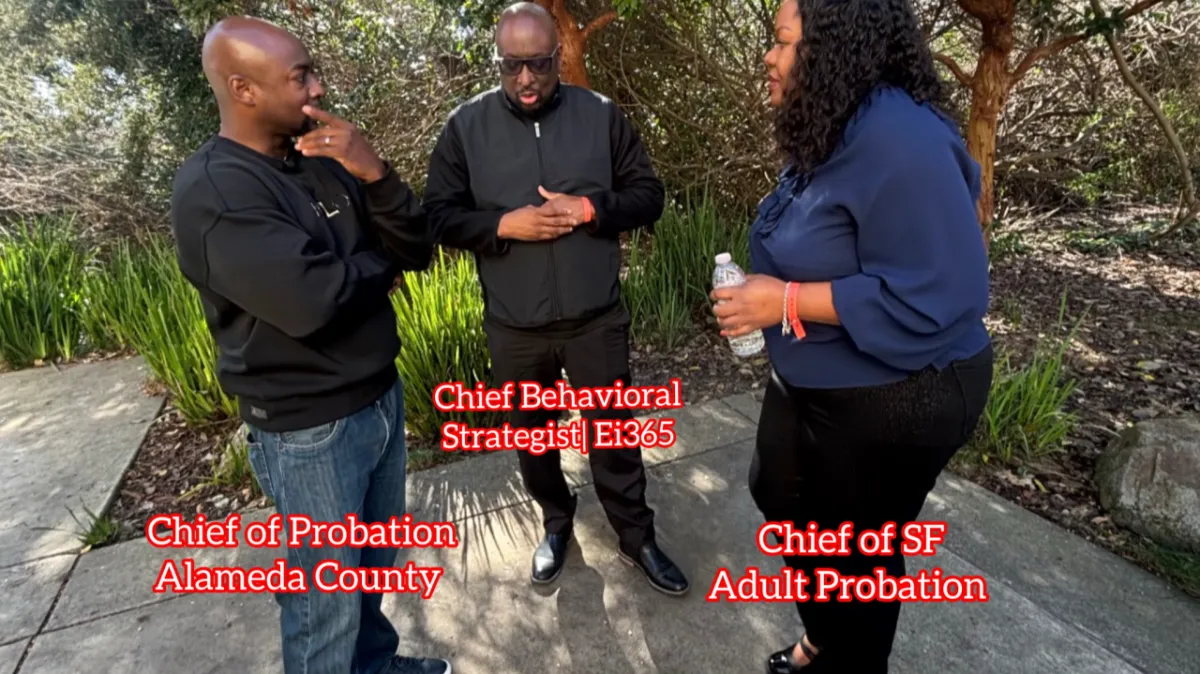
Being invited by Chief Brian Ford and Chief Christel Tullock to serve as the Behavioral Strategist for their joint staff retreat, Move the Middle, was meaningful in ways that go beyond a title or a speaking role.
Alameda County Probation Department and the San Francisco Adult Probation Department came together with a shared intention: not to motivate, not to lecture, but to raise the standard of how leadership actually shows up day to day. What unfolded felt less like a training and more like a leadership retreat because it was rooted in honesty, trust, and a willingness to look at behavior and not just outcomes.
The idea of Move the Middle matters because the middle is where culture lives. In every organization, you have early adopters who are already aligned and laggards who resist change. But the middle is where the largest group is watching. They’re paying attention to what gets tolerated, what gets addressed, and who leaders choose to be when pressure shows up. When the middle shifts, everything shifts.
What made this retreat different is that the Chiefs weren’t asking their teams to do anything they weren’t already doing themselves.
They modeled it.
What stood out most was their clear, people-first approach, anchored in their Professional Companion Model but not as a concept, but as a career strategy and a form of thought leadership. This model goes beyond training or supervision; it sets a standard for how professionals grow, lead, and relate over the course of their careers. It’s not built on theory or slogans, but on real expectations around behavior, accountability, and how people show up for one another when the work is demanding, complex, and human. It signals that leadership development is relational, intentional, and practiced every day.
At one point, Chief Tullock said something simple that landed with weight:
“Be the type of person everyone wants to work with.”
That statement carries responsibility and it means leadership isn’t about authority or title it’s about daily conduct. It’s about how you listen, how you show restraint, and how you recalibrate when things go sideways. That’s Civility Intelligence at work. It’s not just being aware of emotions, it’s deciding how you act when the pressure is real.
Civility Intelligence isn’t about being nice. It’s about setting and protecting a behavioral standard that allows people to do meaningful work without creating unnecessary friction. It’s about leaders being willing to address incivility early, directly, and consistently so it doesn’t quietly erode trust, morale, or performance.
What I witnessed was collaboration done the right way. Most importantly, shared courage to look honestly at their emotional climate with the Civility Index to measure what many organizations avoid naming.
I’m deeply grateful to both Chiefs for the trust, the openness, and the willingness to collaborate at this level. What they are building is repeatable, teachable, and scalable. This is the kind of leadership model probation departments across the country can learn from and adapt without losing their identity.
When leaders are willing to set the standard clearly, measure it honestly, and live it consistently, the middle moves. And when the middle moves, culture shifts, stabilizes and strengthens.
CHECK YOUR TEAM'S EMOTIONAL CLIMATE HERE: